Understanding Recurring Billing

Recurring Billing lets businesses charge customers automatically on a set schedule. This can be weekly, monthly. Or yearly. It works differently than one-time payments. Customers authorize charges in advance.
Merchants or payment processors store payment details securely. This model is popular for subscriptions, memberships. Or payment plans. It ensures payments arrive on time without customer action.
Recurring billing helps businesses manage cash flow. It cuts the risk of late or missed payments. It also lowers costs tied to invoicing and follow-ups.
Customers enjoy convenience. They don’t need to remember due dates. They also don’t need to enter payment info for every charge. But businesses must get clear consent first. They must also share billing frequency, amounts. And cancellation rules.
How Recurring Billing Works?
The process starts when a customer shares payment details. This includes credit card number, expiration date. And CVV. They also authorize future charges. These details are tokenized or encrypted for security.
This meets PCI DSS requirements. Once authorized, the merchant schedules charges. They can be set for the first of each month or every 30 days.
On the scheduled date, the system processes the payment. If approved, funds move to the merchant’s account. A receipt is usually sent to the customer.
If declined, the system may retry the charge. It could also notify the merchant to update payment info. Many systems include dunning management. This automates notices for failed payments. It also lets customers update payment details.
- Customer authorizes future charges during signup or checkout.
- Payment details are securely stored and tokenized.
- Charges are automatically processed on the scheduled date.
- Receipts and notifications are sent to the customer.
- Failed payments trigger retries or customer outreach.
Why Recurring Billing Matters?
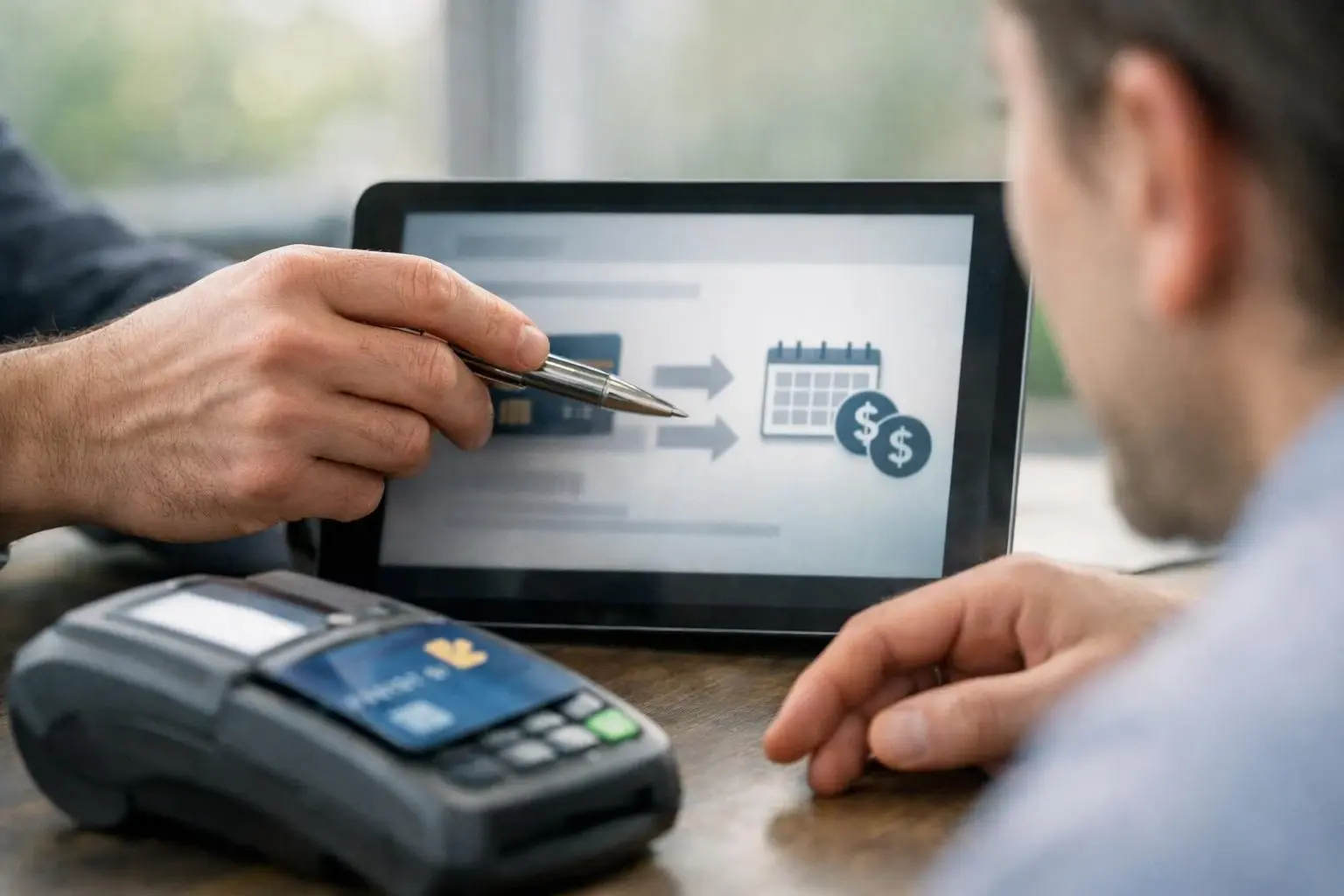
Recurring Billing helps businesses with predictable revenue. This includes SaaS companies, gyms. And utility providers. It cuts churn from missed payments. It also boosts customer retention.
Customers enjoy convenience. They don’t need to remember bill due dates. This can improve satisfaction and loyalty.
Financially, it helps businesses forecast revenue. This is key for budgeting and scaling. It also lowers costs tied to manual billing. Examples include printing invoices or handling payment inquiries.
Recurring billing improves cash flow. It ensures payments arrive on time. This reduces the need for short-term borrowing.
When Recurring Billing Matters Most?
Recurring Billing is key for subscription or membership businesses. Customers expect uninterrupted service. Examples include streaming, cloud storage, gyms. And subscription boxes.
It’s also vital for payment plans. This includes healthcare, schools. Or high-ticket retailers. Customers can spread payments over time. Businesses still get steady revenue.
Compliance and transparency matter in some industries. Businesses must follow laws like EFTA and FCBA. These require clear billing terms. They also give customers rights to dispute charges.
Non-compliance can lead to fines or legal issues. It can also hurt a business’s reputation. Security is another concern. Recurring billing systems must protect customer data. They must also prevent fraud, which is a growing risk.