Glossary

What is Address Verification Service?

Address Verification Service is a fraud-prevention tool used by payment processors and merchants to confirm that the billing address provided by a cardholder matches the address on file with the card issuer. This service compares numeric portions of the address, such as the street number and ZIP code, to reduce unauthorized transactions, particularly in card-not-present environments like online or phone orders.

Sources reviewed: Visa Core Rules and Product and Service Rules, Mastercard Rules

Quick Facts About Address Verification Service

Category

Fraud prevention

Used for

Card-not-present transactions

Common confusion

AVS does not verify the cardholder’s identity—only the billing address

Also called

AVS

Often discussed with

Credit Card Payment Processing, Online Credit Card Processing

Key Takeaways About Address Verification Service

Understanding Address Verification Service

Address Verification Service in Credit Card Processing: Address Verification Service is a fraud-prevention tool used by pa...

Address Verification Service (AVS) is a security feature designed to help merchants and payment processors detect potentially fraudulent transactions. When a customer makes a purchase online, over the phone. Or by mail, the merchant submits the billing address provided by the customer to the card issuer for verification. The issuer then checks this address against the one on file and returns a response code indicating whether the address matches, partially matches. Or doesn't match.

Related glossary terms: Card Not Present, Chargeback, CVV.

AVS is particularly valuable in card-not-present (CNP) transactions, where the merchant can't physically inspect the card or verify the cardholder’s identity. By confirming that the billing address aligns with the issuer’s records, AVS adds a layer of protection against unauthorized use of stolen card information. But AVS does not guarantee fraud prevention—it simply provides an additional data point for merchants to evaluate the legitimacy of a transaction.

How Address Verification Service Works?

When a transaction is initiated, the merchant’s payment gateway sends the billing address details—specifically the street number and ZIP code—to the card issuer or payment processor. The issuer compares these details against the address on file for the cardholder’s account and returns one of several standardized response codes. These codes indicate whether the address fully matches, partially matches (e.g., ZIP code matches but street number does not). Or does not match at all.

Merchants can use these response codes to decide whether to accept, reject. Or flag a transaction for further review. For example, a full match may indicate a lower risk of fraud. While a mismatch could prompt additional verification steps, such as requesting the card security code (CVV) or contacting the customer directly. AVS is not foolproof, fraudsters may still use correct billing addresses. But it significantly reduces the likelihood of unauthorized transactions slipping through undetected.

AVS is widely supported by major card networks, including Visa, Mastercard, American Express. And find. But the specific response codes and level of detail provided can vary slightly between networks. Some issuers may also limit AVS checks to certain countries or transaction types. So merchants should confirm compatibility with their payment processor before relying on AVS as a primary fraud-prevention tool.

Why Address Verification Service Matters?
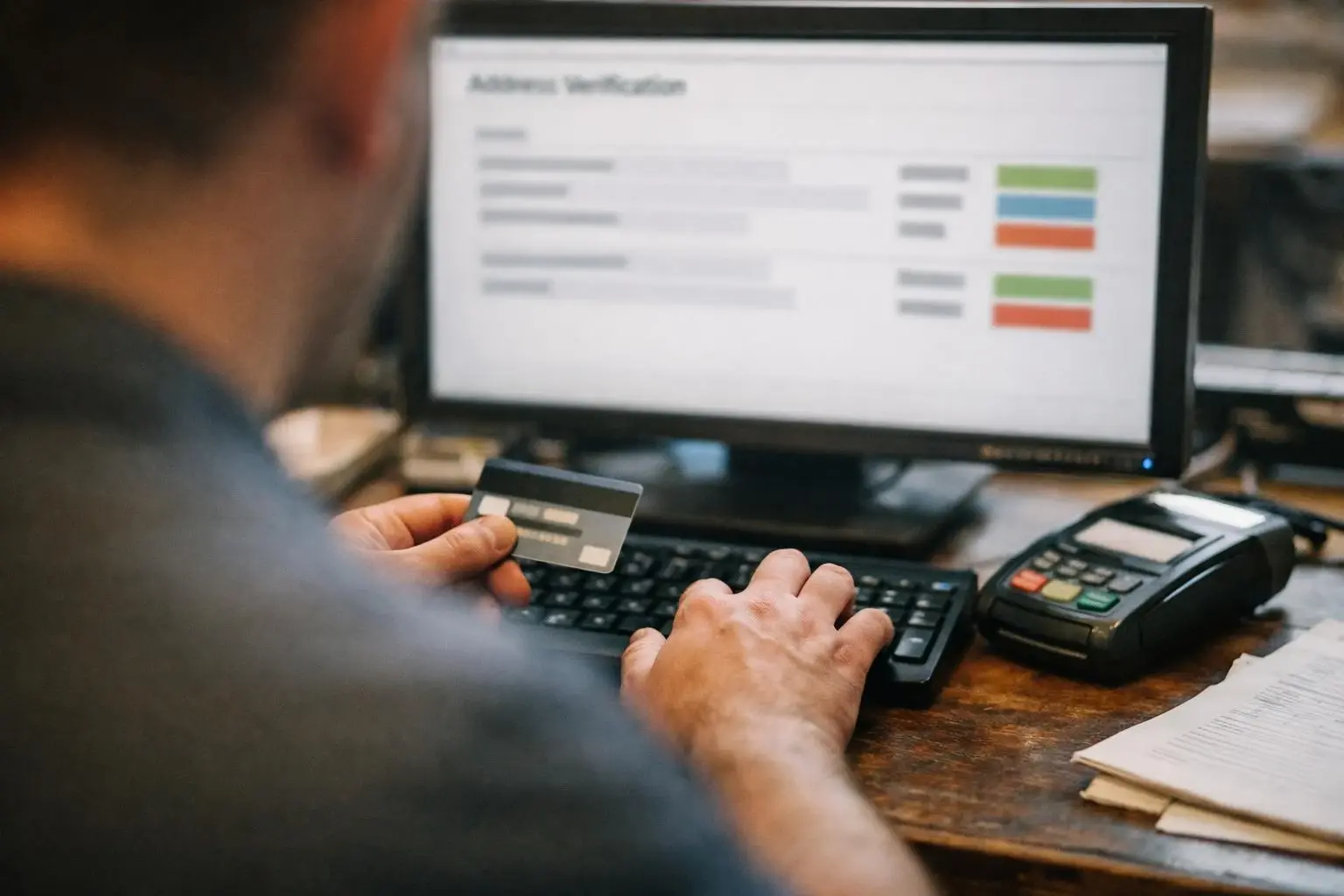
How Address Verification Service applies to Credit Card Processing services in Arlington, United States—practical illustra...

For merchants, AVS is a critical tool for managing risk, particularly in e-commerce and other card-not-present environments. Fraudulent transactions not only result in financial losses but also lead to chargebacks, which can incur fees, damage merchant reputations. And even result in the loss of processing privileges. By using AVS, merchants can identify suspicious transactions early and take steps to verify the cardholder’s identity before completing the sale.

AVS also plays a role in compliance with payment card industry standards. While the Payment Card Industry Data Security Standard (PCI DSS) does not explicitly require AVS, it's often recommended as part of a broader fraud-prevention strategy. Merchants processing high-risk transactions, such as those in industries prone to fraud (e.g., electronics, travel. Or digital goods), may find AVS particularly valuable in reducing their exposure to chargebacks and fraud-related losses.

When Address Verification Service Matters Most?

AVS is most important in situations where the card is not physically present, such as online stores, phone orders. Or mail-order catalog sales. In these scenarios, merchants have no way to verify the cardholder’s identity through traditional methods like signatures or EMV chip authentication. AVS helps bridge this gap by providing a simple, automated way to check whether the billing address provided matches the issuer’s records.

Many projects start with Merchants processing high-volume or high-value transactions should also prioritize AVS, as these transactions are often targeted by fraudsters. And businesses operating in industries with elevated fraud risk, such as electronics, luxury goods. Or travel, may benefit from stricter AVS policies, such as rejecting transactions with partial or no matches. But merchants must balance fraud prevention with customer convenience - overly strict AVS policies can lead to false declines, frustrating legitimate customers and potentially losing sales.

Finally, AVS is particularly relevant for merchants in regions with high rates of card-not-present fraud, including the United States, Canada. And the United Kingdom. While AVS is not universally supported in all countries, it remains a widely used tool for merchants looking to reduce fraud and chargebacks in these markets.

How to Evaluate Address Verification Service?

Related Concepts Compared

Address Verification Service vs. Card Verification Value (CVV)

CVV verifies the three- or four-digit security code on the card. While AVS checks the billing address. Both tools are often used together to reduce fraud in card-not-present transactions.

Address Verification Service vs. 3D Secure

3D Secure adds an additional authentication step, such as a password or one-time code. While AVS is a background check that does not require customer interaction.

Expert Note

AVS is a valuable but imperfect tool—it reduces fraud risk but does not eliminate it. Merchants should use AVS as part of a broader fraud-prevention strategy, combining it with other tools like CVV checks, velocity monitoring. And machine learning-based fraud detection.

Common Mistakes or Myths About Address Verification Service

  • Assuming AVS verifies the cardholder’s identity—it only checks the billing address.
  • Ignoring partial AVS matches, which may still indicate fraud risk.
  • Using AVS as the sole fraud-prevention tool without additional checks like CVV or 3D Secure.
  • Overlooking international transactions, where AVS support may be limited or unavailable.
  • Rejecting all transactions with AVS mismatches, which can lead to false declines and lost sales.

Address Verification Service in Practice: A Real-World Example

An online electronics retailer receives an order for a high-end laptop. The customer provides a billing address that matches the ZIP code on file with the card issuer but not the street number. The AVS response code indicates a partial match, prompting the retailer to request additional verification, such as the CVV code or a copy of the customer’s ID, before shipping the order.

Sources & Further Reading on Address Verification Service

Related Services

Related Terms

Card Not Present

Card Not Present refers to any credit or debit card transaction where the physical card is not presented to the merchant at the point of sale. These transactions occur primarily online, over the phone, via mail order. Or through recurring billing, requiring alternative methods for verifying the cardholder’s identity and authorizing the payment.

Chargeback

Chargeback is a forced refund mechanism that returns funds to a cardholder after they dispute a transaction with their issuing bank. Chargebacks protect consumers from unauthorized charges, merchant errors. Or undelivered goods and services, shifting the burden of proof to the merchant to validate the transaction’s legitimacy.

CVV

CVV is a three- or four-digit security code printed on credit and debit cards to verify that the cardholder physically possesses the card during a transaction. CVV stands for Card Verification Value and is used primarily for card-not-present transactions to reduce fraud by ensuring the code is entered correctly.

Fraud Prevention

Fraud Prevention is a set of strategies, technologies. And practices designed to detect, deter. And mitigate unauthorized or deceptive transactions in payment processing. It encompasses tools like encryption, tokenization, real-time monitoring. And authentication protocols to protect merchants, financial institutions. And consumers from financial losses, identity theft.

Payment Card Industry Data Security Standard

Payment Card Industry Data Security Standard is a global information security framework created by major card brands (Visa, Mastercard, American Express, Discover. And JCB) to protect cardholder data from theft and fraud. It establishes 12 mandatory requirements covering network security, data encryption, access controls. And regular vulnerability assessments that merchants, processors.

CreditCardProcessingArlington.com

Have Questions About Address Verification Service?

Contact CreditCardProcessingArlington.com for practical guidance on Address Verification Service and related credit card processing work in Arlington.

Contact Us